Astanga Yoga

Astanga Yoga
Ashtanga Yoga translates as eight limbs. The Asanas (postures) make up the third limb and these are taught first to the practitioner as a means to purify and prepare the body for meditation. The asanas work to cleanse the nadis (energy channels) in the body allowing the body to become purified and healthy.

The practice of Ashtanga Yoga is a powerful practice; each posture is linked by another series of postures called Vinyasa. A breath dictates each movement therefore the practice, once you are familiar with the asanas, can become a moving meditation. As the asanas are added and there becomes control over the mind through a focus on the breath then the other limbs of Ashtanga Yoga begin to take shape and enable us to work towards a pure mind also.

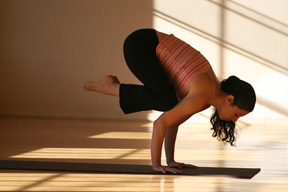
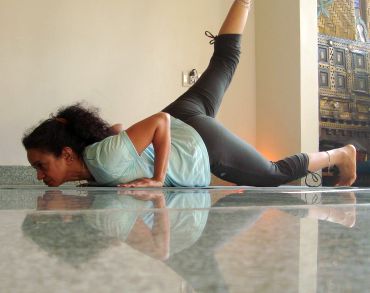
Astanga yoga pose

As you move through the exercises, they will create intense heat causing you to sweat profusely. This will help to detoxify your body and improve your circulation, flexibility, and stamina. It will also bring you a sense of peace and calm... and I would imagine it would also bring a good sense of accomplishment!
It is also believed to bring great clarity and understanding of oneself and ones personality and place in the world.

Warrior pose -Virabhadrasana

Warrior pose
Benefits of Warrior II Pose:
Strengthens and stretches your legs, ankles and feet
  • Stretches your hips, groins and shoulders
  • Opens your chest and lungs
  • Builds stamina and concentration
  • Energizes tired limbs
  • Stimulates your abdominal organs
  • Helps relieve backaches, especially through your 2nd trimester
  • Develops balance and stability
  • Improves circulation and respiration
  • Therapeutic for flat fleet, sciatica, osteoporosis, carpal tunnel and infertility
This pose stretches and strengthens the arms and legs, increases stamina, improves balance and concentration, and can also relieve backaches. If you are suffering from diarrhea, high blood pressure or neck problems, you should take extra caution practicing this pose.

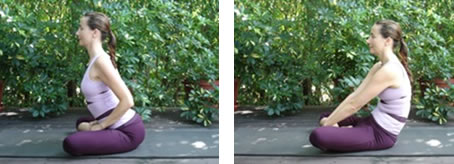
Spinal Flex Pose

Spinal Flex Pose
it with legs crossed, legs apart or soles together in an easy seated pose. Gently relax arms onto lap and touch shins or feet with hands. Inhale, lift chest forward and up. Then begin to round shoulders and drop chin forward on the exhale. Start slowly and begin to increase pace and breath.
This exercise energizes and rejuvenates the female reproductive tract and tones the abdominal organs like pancreas, liver and adrenals. It emphasizes freer pelvic movement with controlled breathing.


This exercise stimulates and releases the tension in the lower spine.
  1. Sit in easy pose and grab the ankles.
  2. Inhale and flex the spine forward, keeping the shoulders relaxed and the head straight.
  3. Exhale and relax the spine back.
Continue for 1-3 minutes or up to 108 times.
To end, inhale deep, hold it, apply root lock, then exhale and relax.

Wide angle pose upavista-konasa

upavista-konasa
pavista Konasana, this pose frees spine and hip joints, relieves sciatica, improves circulation in pelvic region, isolated on white

This exercise opens the entire pelvic region and energizes the female reproductive tract, improving ovarian function as well as normalizing excessive or irregular menstrual flow. It is helpful for varicose veins and improves circulation in the legs.
  Stay low in the Half Wide Angle Pose, and walk your hands to the center of your mat. Your torso now folds straight out and down from your legs.
2.    Place your palms, and eventually, your forearms, down in front of you.
3.    Press your long leg and bent outer knee into the ground, and begin to move little waves through your spine on the inhales to gain length, and on the exhales, deepen the forward bend.
 After your last Half Wide Angle Pose, reach both legs out to the sides, toes pointing to the sky. Press your legs and heels strongly into the floor to engage your hamstrings and calves.
4.    Adding resistance for a more effective stretch, place your palms inside the legs, left hand touching the inner left leg, right hand touching the right. Begin to resist by pressing your legs into the hands, as if trying to close the legs together, but your hands aren’t allowing them to move.
5.    As you resist with 50-75% of your effort, begin to simultaneously fold forward with a long spine. Only hold the pose as long as you can keep the leg action going.

restorative-upavishta

Chair Pose, Utkatasana

Chair Pose, Utkatasana

Steps

  • Stand with your feet and arms in Tadasana or basic mountain pose
  • Inhale deeply, moving your arms forward and overhead, palms facing inwards and on exhalation, squat as if you’re sitting on an imaginary chair, keeping your heels firmly grounded.
  • Try keeping your thighs as parallel to the ground as possible, but you should be able to see your toes, so your knees should be bent just slightly forward of the ankles.
  • Draw in the navel which should help support the spine and aid in dispersing the inner power you have tapped into. Tuck your tailbone in and gaze upwards slightly but do not strain the neck and jaw.
  • As much as possible, keep the spine, head and raised arms in line. Make sure the arms are at the same level as the ears.
  • Hold the position for four to eight slow and steady breaths. And on exiting the pose, inhale as you straighten the legs and exhale when returning the arms to the sides as in Tadasana. It’s important to remember to breathe through this asana and find your balance. Repeat.
Utkatasana
  • Spine Neutral
  • Pelvis Neutral although creating a slight imprint will prevent extension in the lumbar spine.
  • Scapula neutral, avoiding elevation, with an upward rotation due to the flexion at the glenohumeral joint.
  • Appendages – Arms are flexed at the shoulder and pronated so inside of elbow face each other; hands are open and spread with palms facing; legs are together, parallel and flexed at the hip and knee up to 90 degrees; feet  together and parallel with toes (front half of foot) in front of knees.

Balasana – child pose

Balasana – child pose
This pose is excellent for calming anxiety and stress due to emotional causes. This exercise will also relieve menopause related anxiety and irritability. The exercise gently stretches the lower back and is one of the most effective exercises for relieving menstrual cramps and low back pain.

How to Do Child Pose - Balasana 1. Kneel, on the floor, with the feet together and thighs hip width distance apart. Allow your bottom to touch your heels.
2. Exhale as you bend bend at the back of the waist and allow your hips to sink down toward the floor. As you inhale, notice your belly expand against your thighs.
3. Bring your hands to your sides, palms facing up. Inhale and lengthen your neck (forhead on the mat or a cushion). Exhale and allow the weight of your shoulders to fall freely toward the floor.
4. As you breath notice your belly expand against your thighs. As you exhale, imagine your lower back, neck and shoulders letting go of all that no longer serves you. Stay in the pose for 30 seconds to a few minutes.

Twisted child pose

Dhanur Asana (The Bow Posture)


This exercise helps relieve menopause-related fatigue and lack of vitality, elevating your mood and improving stamina. The exercise also stretches the entire spine and helps relieve lower back pain and cramps. It stretches the abdominal muscles and strengthens the back, hips and thighs. It also stimulates the digestive organs and endocrine glands.


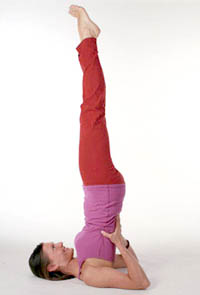
Sarvanga Asana (The Shoulder Stand)

Sarvanga Asana (The Shoulder Stand)

  • Lie down on the floor with your legs together and your hands, push down, by your sides. inhaling, push down on your hands and raise your legs straight up above you.

  • Lift your hips off the floor and bring your legs up, over and beyond your head, at an angle of about45°.

  • Exhaling, bend your arms and support your body, holding as near the shoulders as possible, thumbs around the front of the body, fingers around the back. Push your back up, lift your legs.

  • Now straighten your spine and bring the legs up to a vertical position. Press your chin firmly into the base of your throat. Breathe slowly and deeply in the pose, gradually trying to work your elbows closer together and your hands further down your back toward the shoulders, so as to straighten your torso. Keep your feet relaxed. 
     

    Benefits
    Effective for Excessive anger or hate, Migraine headache, Liver disorder, hemorrhoids, Anemia, Hypertension, Indigestion.

    The Shoulder stand invigorates and rejuvenates your whole body.


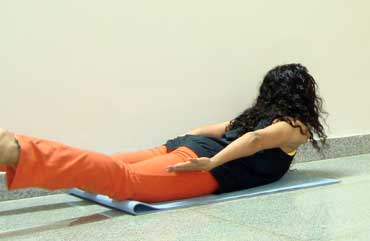
Salabha Asana (The Locust)

Salabha Asana (The Locust)
Step by step:
  • Lie on your stomach, arms by your side, palms facing your legs, your chin is on the floor, the part you can see when you look in the mirror.
  • Fix your lower back on the floor by gently pressing your pubic bone into the floor, and by keeping your tailbone moving towards the pubic bone.
  • Than exhale, pull your navel in towards the spine, inhale lift your head, chest and arms off the floor, firming your shoulderblades into your back, and so opening your heart. You can imagine someone someone holding your hands and pulling you back, to come up higher.
  • In the first stage you can keep your legs on the floor. You could repeat this pose 3 times and the third time in the final pose, also raising your legs. You reach back through the balls of the feet, as much as reaching forward through the heart. Hold for about 40 seconds and build up from there.
  • To come out on the exhalation release the body down.
Benefits:
  • Strengthens the back muscles.
  • Stretches the front of the body.
  • Improves stamina.
  • Opens the chest.
  • Stimulates abdominal organs

Bhujanga Asana (The Cobra)

Bhujanga Asana (The Cobra)
Step by Step
Lie prone on the floor. Stretch your legs back, tops of the feet on the floor. Spread your hands on the floor under your shoulders. Hug the elbows back into your body.
Press the tops of the feet and thighs and the pubis firmly into the floor.
On an inhalation, begin to straighten the arms to lift the chest off the floor, going only to the height at which you can maintain a connection through your pubis to your legs. Press the tailbone toward the pubis and lift the pubis toward the navel. Narrow the hip points. Firm but don't harden the buttocks.
Firm the shoulder blades against the back, puffing the side ribs forward. Lift through the top of the sternum but avoid pushing the front ribs forward, which only hardens the lower back. Distribute the backbend evenly throughout the entire spine.
Hold the pose anywhere from 15 to 30 seconds, breathing easily. Release back to the floor with an exhalation.


Benefits

  • Strengthens the spine
  • Stretches chest and lungs, shoulders, and abdomen
  • Firms the buttocks
  • Stimulates abdominal organs
  • Helps relieve stress and fatigue
  • Opens the heart and lungs
  • Soothes sciatica
  • Therapeutic for asthma
  • Traditional texts say that Bhujangasana increases body heat, destroys disease, and awakens kundalini.